The AI company
AI does the work.
Tudor decides what ships.
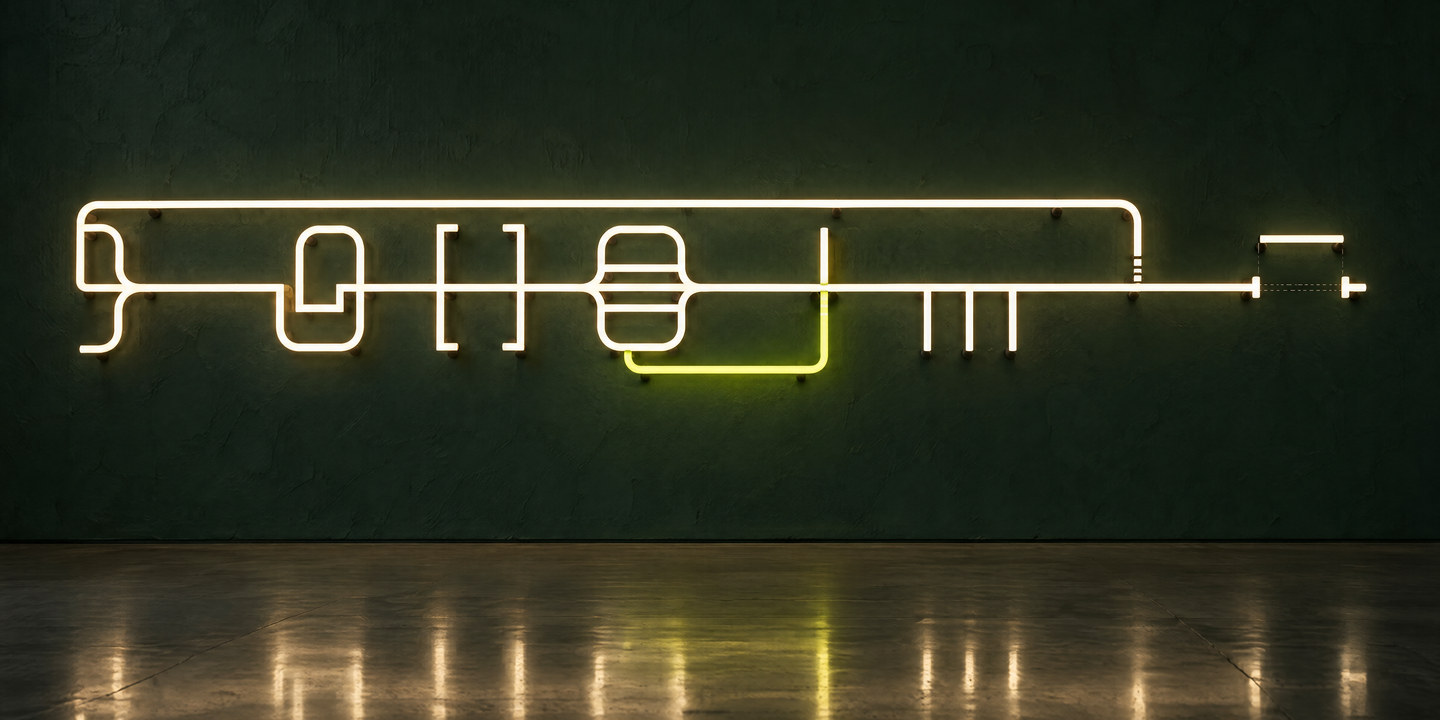
Upper row
Lower row
Agents make the work. Checks can send it back. Tudor decides what ships.
The eight signs, drawn as light. A rendered picture, not a photograph of a place.
The reading
Read the picture.
Lessons return
What we're building with
A company written
in software.
The AI company is software. Tudor wrote it, and he keeps correcting it. It is made of agents that read sources, write, design, cut film and write code, and of rules that stop a piece from being called finished before it is.
Making and checking
Work can go back.
Workers take a recorded task and build the change. The refinery merges it only after the checks pass.
Our policy names seven checks that can block a change. A riskier change must pass more required checks.
The capabilities behind these signs
Software factory. Workers build changes from recorded tasks. The refinery checks before merging.
Checks and balances. Risk tiers determine the checks a change must pass. They do not promise work without faults.
A request and what we keep
Start with what
we already know.
Tudor gives a task. Discovery collects new sources and ideas.
Memory keeps earlier facts and decisions with where they came from, so a new piece of work starts from what we already know.
The capabilities behind these signs
Discovery. The system collects candidate ideas and presents possible work with evidence.
Memory. Agents retrieve earlier facts and source-linked decisions. Recall is not complete or infallible.
Auto wiki. Retained subject pages are revised from their sources.
Development tools. The radar reads new tools and model releases. Tudor assesses them against real work.
Domain mastery. Subject knowledge separates reading from tested application. Maintained pages do not prove mastery.
Define the work
An outcome.
A way to check it.
A work order names the result and how to check it before a worker takes the task.
The capabilities behind this sign
Brain. Brain proposes the next piece of work, with a reason, the result it must reach and how to check it. Tudor chooses.
Engine orchestration. Controllers start eligible work and keep task ownership separate from merging.
Best next move. Suggestions include a stated reason and a check. They do not decide Tudor's priorities.
The record and the return
Keep the result.
Review the lesson.
Durable work records and events retain what happened.
Each day the system reviews finished work and proposes lessons. Tudor approves what it keeps.
The capabilities behind these signs
River. The parts write events. Other parts react to the record.
Persistence. Work decisions and selected knowledge survive beyond an individual conversation.
Continual learning. The system proposes reusable lessons from recorded results. Substantive memory changes need human approval.
Context graphs. Recall can retrieve related records through a file link or shared subject.
Auto research. The system can collect sources and write bounded research packets. Experiments need separate permission.
Nerve. Nerve watches the work. A process that stops is restarted by rule.
The record of the work
Code activity,
with its limits.
code changes proposed
code changes accepted
days to November 12, 2026
The counts describe code activity in our repository. They say nothing about a client's results.
How we count
Proposed: count all pull request records in the repository, including open, closed, draft, and merged records.
Accepted: count repository pull request records whose GitHub state is MERGED, regardless of their target branch.
Tell me what you want to build.
Send a link and a few lines about what you want to build.
tudor@saitoc.com